
Bragg Peak and Normal Tissue Sparing in Particle Therapy
One of the main advantages of particle therapy is its dose distribution.
Unlike conventional X-ray radiation, proton and carbon-ion beams deposit much of their radiation dose at a defined depth inside the body. This physical characteristic is known as the Bragg Peak.
Beyond the target depth, the dose falls sharply, which can reduce radiation exposure to surrounding normal tissues.
This is particularly important when a tumor is located close to radiation-sensitive structures, often referred to as organs at risk, or OARs.
Examples include the brain, spinal cord, optic nerves, eyes, salivary glands, heart, lungs, liver, stomach, bowel, bladder, rectum, kidneys, and major blood vessels.
The practical purpose is to deliver an effective dose to the tumor while limiting avoidable dose to nearby normal tissues.
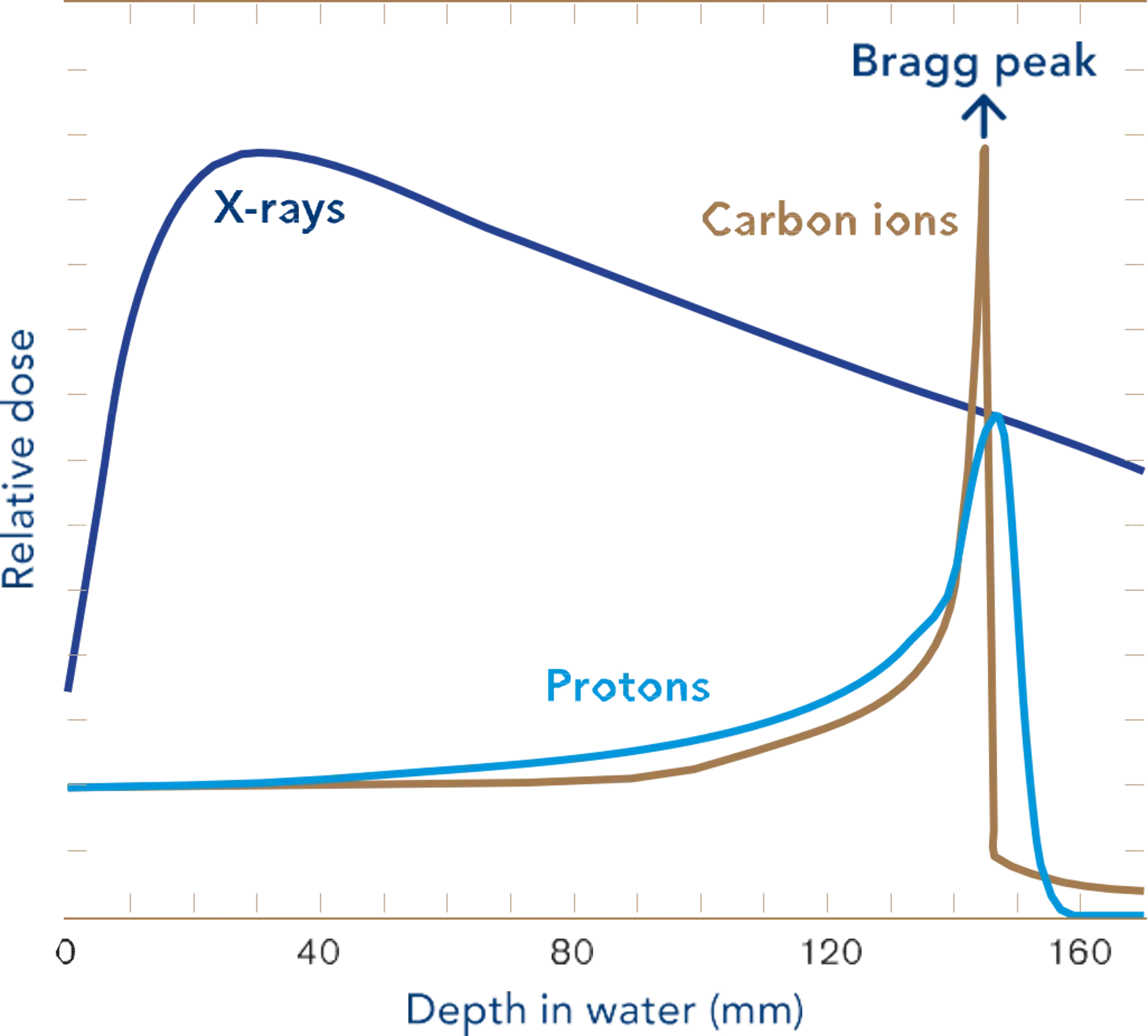
This dose distribution may be particularly relevant in selected situations, including:
- Tumors located near critical organs
- Re-irradiation in previously irradiated areas where normal tissue tolerance limits further conventional radiation
- Pediatric and adolescent patients, where reducing long-term radiation exposure may be important
- Recurrent tumors, particularly when conventional local treatment options are limited